How Newsrooms Decided What Mattered Before the Feed
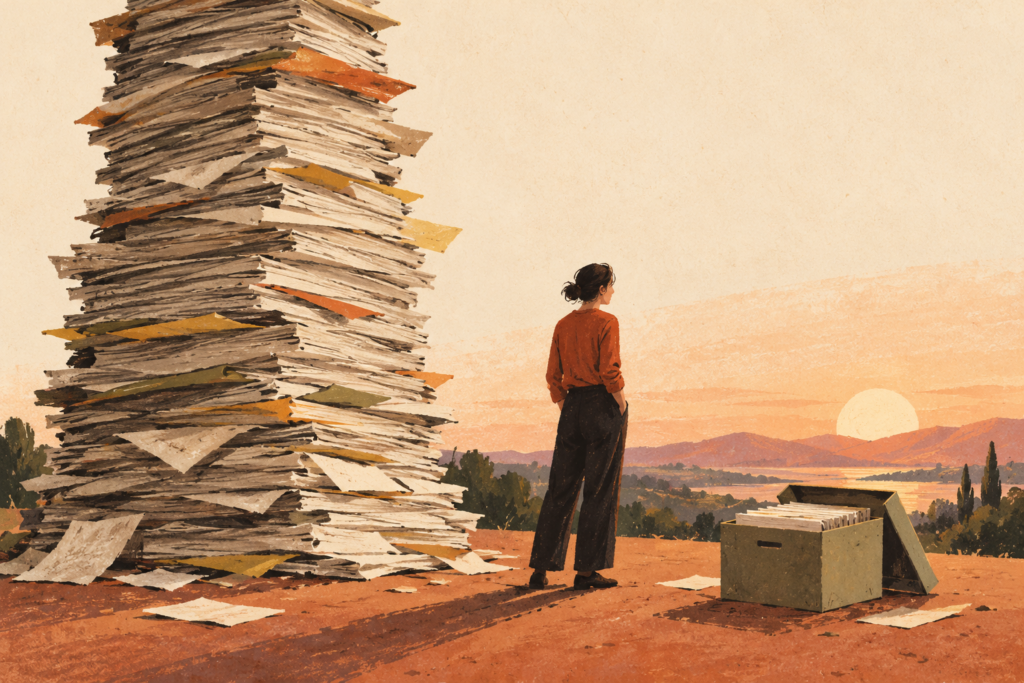
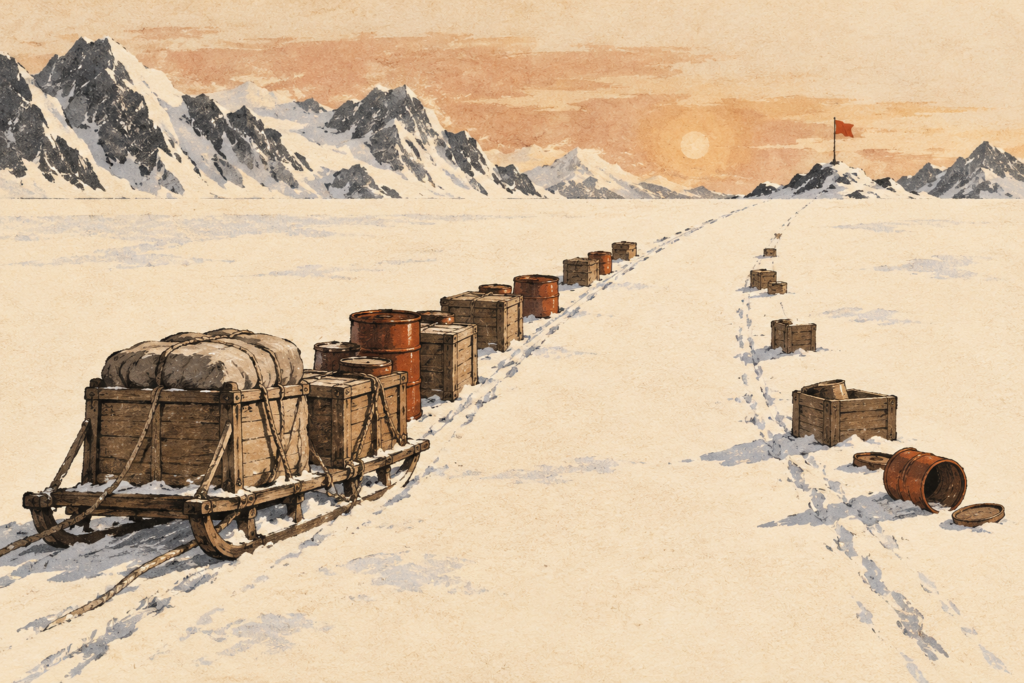
A finite front page forced a daily decision that nobody could defer. The constraint was artificial and it produced better judgement than infinite space does.

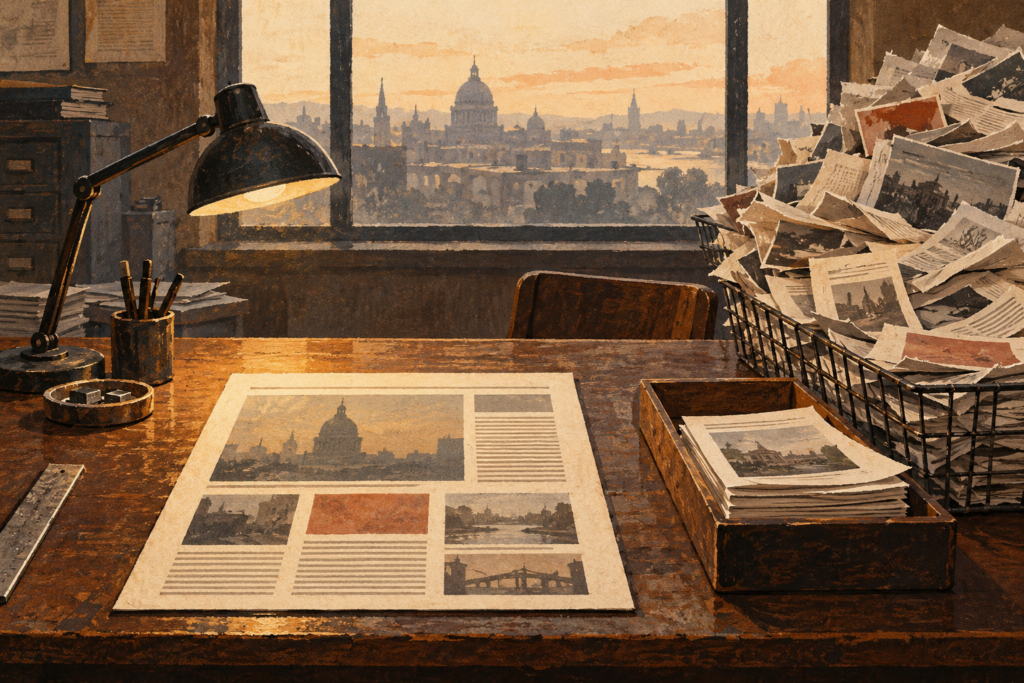
Picture the afternoon news conference at a daily paper, in the years before publishing went continuous. A dozen stories are competing for a front page that holds perhaps six, the edition has a fixed number of pages behind it, and the presses will run at the same time tonight whatever anyone in the room thinks. More happened that day than could ever be printed, so somebody has to decide, out loud and before the deadline, and the stories that lose will visibly fail to appear in the morning.
The limit was entirely artificial, a product of paper, ink and the hours it took to print. Yet it imposed a daily discipline of choosing that unlimited space has quietly taken away, and the way that discipline worked translates surprisingly well to an ordinary working day.
How the daily news conference forced a decision
The conference worked because it made a decision unavoidable at a fixed hour and offered no way to postpone it. Editors assembled, argued for their competing stories, and filled the page. Whatever failed to make it was not set aside for a better moment; it simply did not run.
Three features of that meeting did most of the work.
It happened at a fixed time. The meeting was held when the schedule said, whether or not anyone felt ready, because the presses would not wait and so the decision had no room to slide.
It produced a single result. There was one front page and one lead story, rather than a ranked list of forty candidates that all stayed live.
Losing stories were plainly out. A story that lost did not linger in some ambiguous middle state, and everyone in the room knew it would not be running.
That third feature is the one most personal systems are missing. A task that loses today usually stays on the list with exactly the status it had before, which means it was never really turned down. A choice that turns nothing down has settled nothing, and that is why prioritising everything resolves nothing.
Why stated criteria made the selection arguable
Newsroom choices could be argued over sensibly because the criteria for what counted as news were stated in the open. Johan Galtung and Mari Ruge’s 1965 study of foreign news set out to identify the factors that determine which events become news, and proposed a set of news values including unambiguity, relevance to the audience, magnitude, and reference to elite nations or persons.
People have disputed that framework ever since, and the dispute is the useful part. Once criteria are written down, a choice can be challenged on those criteria instead of being settled by whoever argues hardest. An editor could say this is bigger or this matters more to our readers and be answered in the same terms.
Most personal prioritising runs on no stated criteria at all. Items are weighed against a vague sense of importance, so the comparison cannot be checked, and in practice it goes to whichever item is loudest. Writing down two or three questions, such as what changes if this gets done, what would be hard to undo, and what you would regret leaving, turns an impression into something you can reason about and, when it matters, argue with.
What changed once there was room for everything
Continuous publishing removed the need to leave anything out, and with it went the daily act of judgement that the front page had demanded.
That sounds like an improvement, and in some ways it is. But when everything can run, the question of which story matters most stops carrying any weight, and selection drifts towards whatever attracts attention fastest. That is a different criterion altogether, applied automatically, by a mechanism nobody sat down and chose.
Barry Schwartz’s argument in The Paradox of Choice is usually applied to shoppers, but it fits the people producing a paper just as well: beyond a certain point, more options make the process of choosing worse rather than better. A page that holds six stories forces a ranking. A feed that holds everything never asks for one, and the ranking that emerges is one nobody would have defended out loud in that afternoon meeting.
A working day built on an unlimited list goes the same way. With no edge to the page, there is never a point at which something has to be left off, so the morning fills with whatever is newest or noisiest and the choosing never quite takes place. A surface of fixed size puts that moment back, which is why a single page does something a long list cannot.
Who owned the decision, and what the press time did
Two quieter features mattered as much as the size of the page: one person owned the decision, and a fixed press time brought it to an end.
A named editor answered for the front page
An editor’s judgement settled the page, and if the lead turned out to be the wrong call, the mistake could be traced to a person rather than to a process. That made the choice open to argument beforehand and to review afterwards, which a consensus or an algorithm rarely is.
For one person planning one day, this has less to do with authority than with what happens otherwise. When nobody owns the decision, it gets made by default, by whatever arrived most recently or pressed hardest, and there is no one to hold to account, yourself included.
Why the deadline helped even though pressure rarely does
The fixed press time is the part people tend to romanticise, often for the wrong reason. Pressure seldom improves thinking, and the deadline probably made nobody’s judgement sharper. What it did was end the deliberation at a defined point, which is a different job and a more valuable one. A decision that can be reopened indefinitely tends to be reopened, and every reopening costs something.
For a working day, the equivalent is choosing the evening before at a set moment, instead of renegotiating the choice all through the morning. What you gain is a decision that closes. Applied carelessly, deadlines produce panic rather than focus, and urgency is a poor selection criterion even when it feels like clarity.
Four newsroom habits that work on an ordinary day
The way newsrooms decided what mattered comes down to four habits, and none of them depends on working in journalism.
A fixed moment to choose. Decide at the same time each day, instead of whenever the need happens to be felt.
A limited surface. Choose one thing rather than a ranked list, since the limit is what turns a preference into a decision.
Stated criteria. Write two or three down, so that a choice can be checked instead of merely felt.
A clear verdict on what lost. Give whatever did not make it a definite status: a date, a deliberate release, or a plain no.
Greg McKeown’s compact version of all four is that if something is not a clear yes, it is a no. What the newsroom adds is a picture of what it takes to live by that rule every day, which turns out to be a deadline, a page of finite size, and someone obliged to say which story leads.
The Do One Thing diary is a printed page with room for one line a day, which makes it, in effect, a front page with space for a single lead. That constraint is the whole mechanism, and it is the one thing an unlimited surface cannot provide.
Newspapers never had room for everything that happened. That shortage is the reason someone had to sit down every afternoon and say what mattered.